
$47 Billion Boom: How FIFA's Back-to-Back Tournaments Will Transform the US Economy.
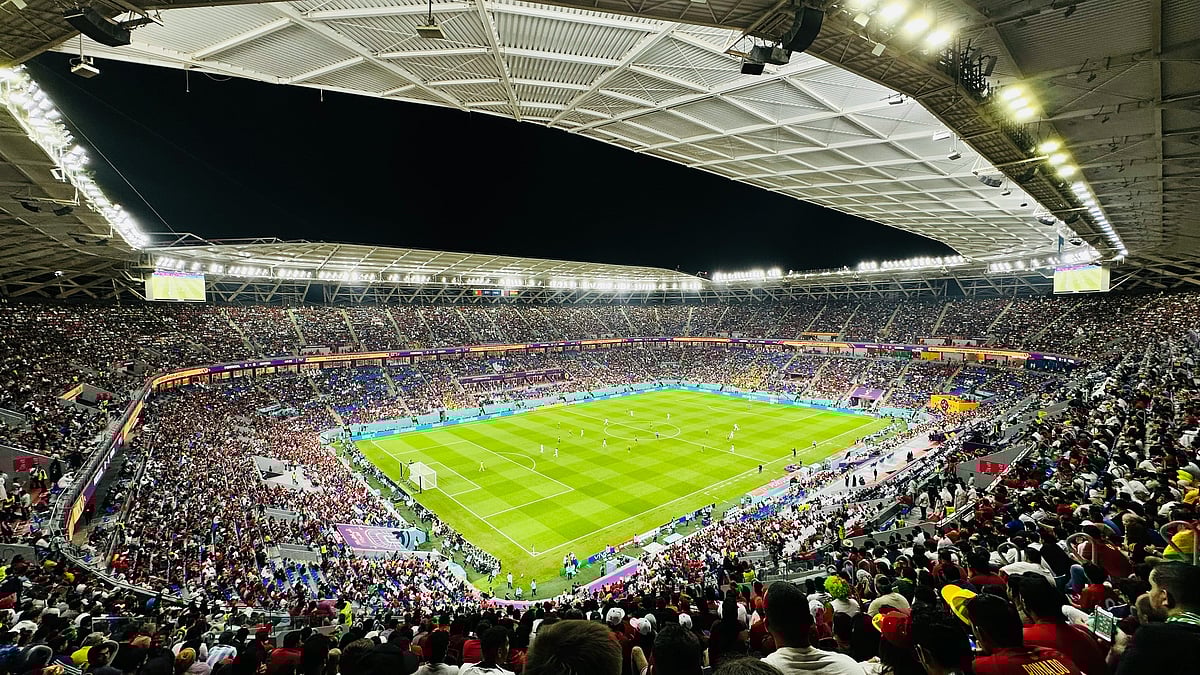
The Massive Impact of Back-to-Back FIFA EventsAs the FIFA Club World Cup 2025 concludes and the expanded FIFA World Cup 2026 approaches (June 11–July 19), independent studies highlight an unprecedented economic surge for North America, particularly the United States. A joint FIFA-World Trade Organization (WTO) analysis, conducted by OpenEconomics and released in early 2025, projects these tournaments as catalysts for billions in growth, job creation, and long-term development.lasec.net Launched economic impact projection graphic for FIFA World Cup 2026
Overall Projections: A $47 Billion Boost for the US
The combined events are forecasted to generate $47 billion in gross output for the United States alone. This figure encompasses direct spending (e.g., tickets, hospitality), indirect effects (supply chain purchases), and induced impacts (employee spending).
Breakdown by Tournament:
FIFA Club World Cup 2025 (solely in the US, 11 cities): $17.1 billion in gross output, contributing $9.6 billion to US GDP.
FIFA World Cup 2026 (78 matches in the US across 11 cities): $30.5 billion in gross output, adding $17.2 billion to US GDP.
Globally, the duo is expected to inject $62 billion into GDP, with the 2026 World Cup alone driving $40.9 billion worldwide.These estimates use advanced methodologies, including inter-country social accounting matrices across 45 sectors and 76 countries, aligned with OECD guidelines.
Job Creation: Nearly 300,000 Opportunities
The tournaments are projected to support approximately 290,000 full-time equivalent (FTE) jobs in the US:
Club World Cup 2025: Around 105,000 jobs.
World Cup 2026: About 185,000 jobs.
Roles span construction (stadium upgrades), hospitality, transportation, security, retail, and event operations. Host cities like Atlanta, Los Angeles, Miami, and New York/New Jersey will see the largest gains, with thousands of temporary positions transitioning to permanent ones in tourism and services.
Tourism Surge: Millions of Visitors Driving Spending
Attendance figures underscore the tourism boom:
Club World Cup 2025: 3.7 million spectators.
World Cup 2026: 6.5 million across North America, with ~40% international fans staying an average of 12 days.
International visitors are expected to spend heavily on accommodations, dining, transport, and entertainment. Key highlights:Potential rebound for US tourism after a projected 6.3% decline in inbound visits in 2025.
Airbnb revenue alone could exceed $2.6 billion in the US.
City-specific examples: Los Angeles anticipates 179,000 out-of-town visitors spending ~$2,350 each; Philadelphia projects $770 million in impact and 6,615 jobs; Seattle forecasts over $929 million.
This influx will elevate hotel occupancy, restaurant revenues, and retail sales, with a "legacy effect" sustaining tourism growth post-event (estimated at 65%).travelandtourworld.com
Social and Legacy Benefits:
Beyond the NumbersThe studies value combined social returns at $11.64 billion ($8.28 billion from the World Cup, $3.36 billion from the Club World Cup). These include:Infrastructure improvements (e.g., stadium renovations, public transport upgrades).
Community engagement and youth programs.
Enhanced global visibility for host cities, fostering long-term investment.
Potential Challenges and Considerations
While overwhelmingly positive, factors like high ticket prices, visa processes, and summer heat could moderate international turnout. However, the scale—104 matches, 48 teams, tri-nation hosting—positions 2026 as a transformative moment for soccer's growth and economic vitality in North America.These back-to-back spectacles represent one of history's largest sporting economic injections, promising sustained prosperity as the world converges on the continent.
______

0 Comments