
FIFA World Cup Number of Teams by Year: From 13 in 1930 to 48 in 2026
The FIFA World Cup is the greatest spectacle in international football, a quadrennial event that unites billions of fans worldwide. Since its humble beginnings in 1930, the tournament has transformed dramatically in scale, format, commercial power, and global reach.
One of the most visible changes has been the steady expansion in the number of participating teams — from a small, invitation-heavy gathering to a truly global competition.
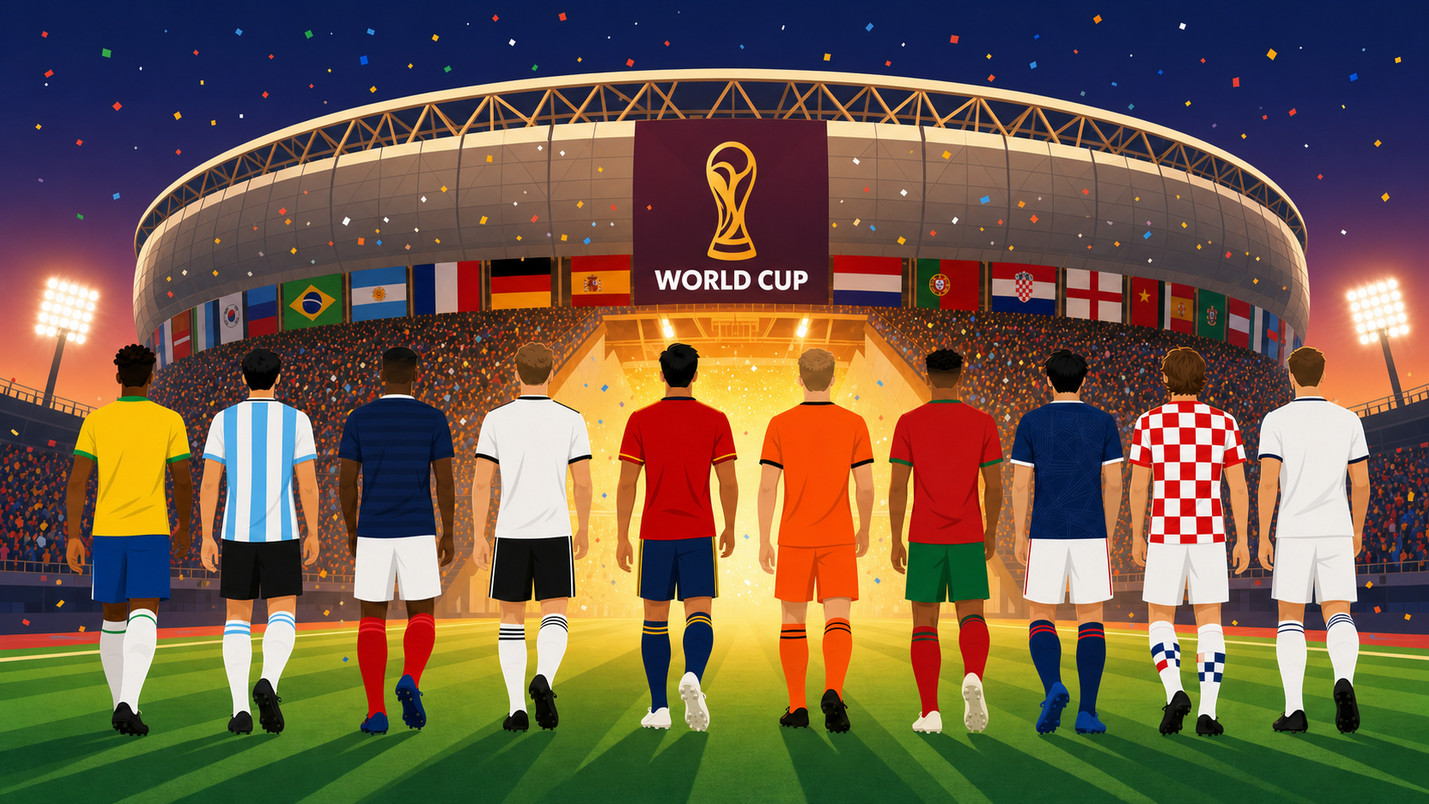
The Early Years: An Exclusive Club (1930–1978)
The inaugural World Cup, hosted by Uruguay in 1930, featured just 13 teams. Travel constraints and political tensions limited participation, with only four European nations making the journey across the Atlantic.The tournament gradually stabilized in the post-war period:
1934 (Italy): 16 teams
1938 (France): 15 teams (Austria withdrew after qualifying due to annexation)
1950 (Brazil): 13 teams (multiple withdrawals, including India)
From 1954 to 1978, the World Cup settled into a consistent 16-team format across seven editions (Switzerland 1954, Sweden 1958, Chile 1962, England 1966, Mexico 1970, West Germany 1974, and Argentina 1978).This compact structure delivered intense competition and straightforward knockout stages, but it also excluded many emerging football nations, particularly from Africa, Asia, and CONCACAF.
The First Major Expansion: 24 Teams (1982–1994)
By the 1980s, FIFA recognized the need for greater inclusivity as football’s popularity surged across continents. The 1982 World Cup in Spain introduced a 24-team format, marking the first significant expansion in the tournament’s history.This format was used for four tournaments:1982 Spain
1986 Mexico
1990 Italy
1994 United States
The change opened doors for more teams from Africa and Asia, increased diversity, and introduced a more complex group stage. It helped the World Cup evolve into a more representative global event.
The 32-Team Era: Global Standardization (1998–2022)
The most successful and enduring format arrived in 1998, when host nation France welcomed 32 teams. This expansion struck an effective balance between quality and inclusivity and remained the standard for seven editions:
1998 France
2002 Japan/South Korea
2006 Germany
2010 South Africa
2014 Brazil
2018 Russia
2022 Qatar
With eight groups of four, followed by a round of 16, the 32-team setup allowed stronger representation from all confederations while maintaining high competitive standards. This era coincided with the tournament’s explosive growth in television audiences, sponsorships, and cultural influence.
The Future: A 48-Team World Cup (2026 Onwards)
The next major chapter begins in 2026, when Canada, Mexico, and the United States co-host the first-ever 48-team World Cup. This represents the largest single expansion in FIFA’s history, adding 16 more teams to the final tournament.The new format will feature 12 groups of four in the first stage, followed by a round of 32. FIFA argues the expansion will further democratize the sport, giving more nations — especially from underrepresented regions — a chance to compete on football’s biggest stage. While supporters celebrate increased inclusivity, critics raise concerns about match quality, fixture congestion, and player welfare.
List of FIFA World Cup Teams by Year – 1930 to 2026
| Year | Host(s) | Teams |
| 1930 | Uruguay | 13 |
| 1934 | Italy | 16 |
| 1938 | France | 15 |
| 1950 | Brazil | 13 |
| 1954 | Switzerland | 16 |
| 1958 | Sweden | 16 |
| 1962 | Chile | 16 |
| 1966 | England | 16 |
| 1970 | Mexico | 16 |
| 1974 | West Germany | 16 |
| 1978 | Argentina | 16 |
| 1982 | Spain | 24 |
| 1986 | Mexico | 24 |
| 1990 | Italy | 24 |
| 1994 | United States | 24 |
| 1998 | France | 32 |
| 2002 | Japan / South Korea | 32 |
| 2006 | Germany | 32 |
| 2010 | South Africa | 32 |
| 2014 | Brazil | 32 |
| 2018 | Russia | 32 |
| 2022 | Qatar | 32 |
| 2026 | Canada / Mexico / USA | 48|
______

0 Comments